
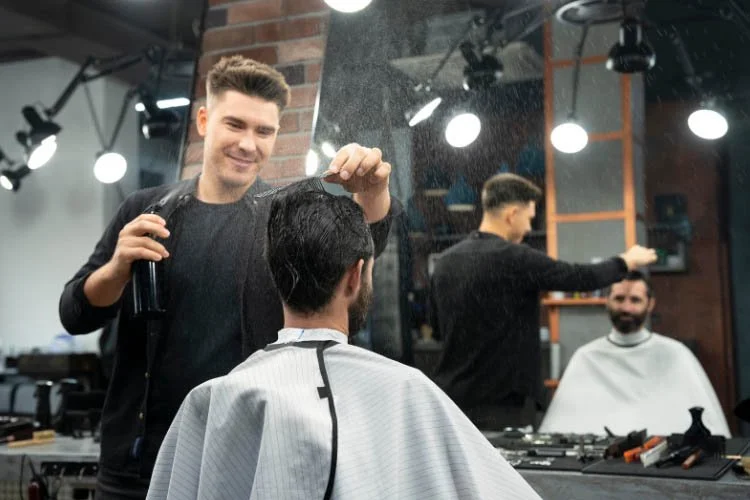
A good men's haircut is not simply about deciding how short the sides should be or how much length to leave on top. One of the most important techniques a barber uses is length contrast — the difference between longer and shorter areas of the haircut. When used correctly, this contrast can change how the head appears from almost every angle. It can make a rounder head look more structured, add balance to a flatter profile, or prevent a longer face from appearing even more elongated. Understanding how length contrast works also explains why the same haircut can look completely different on two men.
1. Length Contrast Controls the Overall Silhouette
When a barber looks at your head, they are considering more than individual sections of hair. They are looking at the overall silhouette created by the different lengths.
The transition between the sides, top, and back determines where the eye sees width, height, and shape.
Shorter sides can make the top appear fuller.
Longer areas can add visual weight where it is needed.
Gradual transitions can create a smoother silhouette.
Stronger contrast can make a haircut look more defined.
This is why simply asking for "short sides and long on top" does not always produce the same result. The exact relationship between those lengths matters.
2. Shorter Sides Can Add Structure
One of the most common ways barbers use length contrast is by reducing the sides while keeping more length through the top. This creates a visual difference that can make the head appear more structured.
For men with fuller or rounder facial and head shapes, reducing excessive width around the sides can help create a more balanced appearance. The goal is not necessarily to make the sides as short as possible. Instead, the barber removes enough weight to improve the proportions.
A well-designed fade or taper can therefore do more than create a clean finish. It can change how the entire haircut frames the head.
3. Keeping Length in the Right Places Adds Balance
Length contrast is not always about taking hair away. Sometimes, leaving additional length in a specific area is what creates the better shape.
For example, a barber may preserve more weight around the upper sides or top when removing too much would make the head look narrow or elongated. Similarly, extra length through the top can provide height and movement without making the sides look bulky.
A barber considers factors such as:
Head shape and natural proportions.
Hair density in different areas.
Growth patterns around the crown.
Facial proportions.
The client's preferred hairstyle and maintenance level.
The result is a haircut where the lengths work together rather than competing with one another.
4. Contrast Can Make Hair Look Fuller or Thinner
The relationship between lengths can also influence how thick or fine the hair appears. When shorter sections sit beside longer, denser areas, the difference can make the longer hair appear more substantial.
For men with thick hair, controlled contrast can help remove unwanted bulk without making the entire haircut feel overly short. For men with finer hair, keeping strategic length can help maintain the appearance of density.
This is particularly important when choosing a fade. A very tight fade creates significant contrast with the top, while a taper or longer fade produces a softer transition.
5. The Best Contrast Depends on Your Hair and Head Shape
There is no single ideal amount of contrast for every man. A haircut that creates excellent proportions for one client may exaggerate the wrong features on another.
A skilled barber considers the areas where the head naturally projects or recedes and uses length accordingly. This is especially useful when working with cowlicks, uneven growth, prominent areas, or flatter sections of the head.
Instead of following a fixed haircut formula, the barber can adjust the length and transition to create a more balanced result.
6. Good Length Contrast Should Still Look Natural
The best length contrast is often the kind you notice without immediately knowing why the haircut looks better. The transitions feel intentional, the head looks balanced, and the haircut works from multiple angles.
For men in Vancouver, this can also make everyday grooming easier. A well-proportioned haircut can maintain its shape through commuting, changing weather, and busy workdays without requiring excessive styling.
At In The Cut Barbershop, barbers consider how each length connects with the next rather than treating the haircut as separate sections. That attention to proportion helps create men's haircuts that look clean while still fitting the individual.
Conclusion
Length contrast is one of the subtle techniques that can make a men's haircut look significantly more balanced and intentional. By adjusting where hair is kept longer, where weight is removed, and how each section transitions into the next, a barber can enhance the natural shape of the head while creating a haircut that works from every angle.
At In The Cut Barbershop in Vancouver, our experienced barbers understand that every man's hair and head shape are different. We consider your natural proportions, hair density, texture, growth patterns, preferred length, and everyday styling routine to determine how much contrast will create the most flattering result.
Book your appointment at In The Cut Barbershop in Vancouver and let our team create a haircut designed specifically for you. With the right balance of length and contrast, you can achieve a clean, structured look that feels natural, suits your features, and continues to look great as it grows.
