
The Hidden Role of Hair Direction in Getting a Better Cut
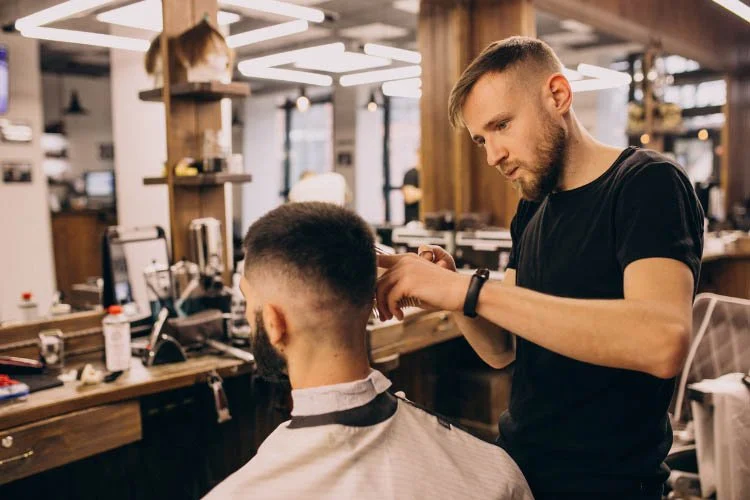
Most men focus on length, fade level, or style when getting a haircut—but one of the most overlooked factors is hair direction. The way your hair naturally grows and falls plays a major role in how your haircut looks, behaves, and holds up throughout the day.
If your hair never seems to sit right, sticks out in certain areas, or looks uneven even after a fresh cut, hair direction could be the reason. At In The Cut Barbershop, we pay close attention to growth patterns to ensure every haircut works with your hair—not against it.
1. Hair Doesn’t Grow Straight Down
Hair grows in natural patterns that vary from person to person.
Common growth patterns include:
Forward or backward growth
Sideways growth near the temples
Cowlicks at the crown
Irregular directions in the front hairline
Ignoring these patterns can lead to cuts that look good initially but become difficult to manage. A skilled barber studies how your hair grows before making any major cutting decisions.
2. Cutting Against Hair Direction Causes Problems
When hair is cut without considering its natural direction, it often resists the shape.
This can result in:
Hair sticking out awkwardly
Uneven volume distribution
Styles that won’t hold without heavy product
Hair naturally wants to return to its growth pattern. If the cut fights that direction, you’ll spend more time trying to fix it every day.
3. Proper Direction Creates Natural Flow
When a haircut follows your hair’s natural direction, everything looks more balanced.
Benefits include:
Hair falls into place more easily
Reduced need for styling effort
Cleaner, more controlled appearance
This is what separates an average haircut from a well-executed one. The goal isn’t just shape—it’s how the hair moves and settles naturally.
4. Cowlicks and Problem Areas Need Special Handling
Certain areas, like the crown or front hairline, can be difficult to control.
These areas often:
Grow in multiple directions
Create lift or separation
Disrupt the overall style
Instead of forcing these areas down, a good barber works with them—adjusting length and blending techniques so they become part of the style rather than a problem.
5. Hair Direction Affects Fade and Blend Quality
Even fades and blends depend on understanding growth direction.
If ignored:
Fades can look uneven
Transitions may appear patchy
The haircut may lose symmetry
Hair that grows in different directions reflects light differently, which can affect how smooth a fade appears. Precision requires adjusting technique based on direction.
6. Styling Becomes Easier When Direction Is Respected
A haircut should make your daily routine simpler—not harder.
When cut correctly:
Hair responds better to minimal product
Styling takes less time
The shape holds throughout the day
Instead of forcing your hair into place, you’re working with its natural behavior, which leads to more consistent results.
Conclusion
Hair direction is one of the most important yet overlooked factors in getting a better haircut. It influences how your hair falls, how it holds shape, and how easy it is to manage daily. When ignored, even a good-looking cut can become frustrating to style. When respected, your hair works with you, not against you.
At In The Cut Barbershop, we take the time to understand your hair’s natural growth patterns before we cut. This allows us to create styles that are not only sharp but also practical and easy to maintain in your everyday routine.
Book your appointment today at In The Cut Barbershop, and experience a haircut designed to work with your hair’s natural direction for better results every time.
