
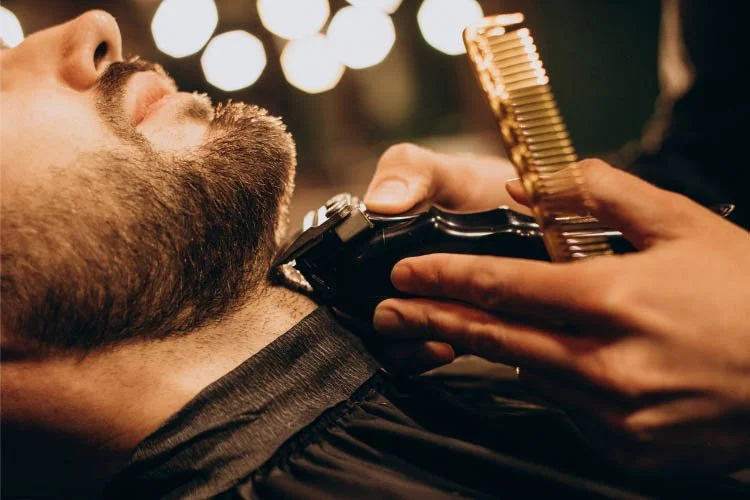
Growing a beard is only part of the process. Once your facial hair reaches a certain length, simply taking a little off the ends may not be enough to keep it looking clean and balanced. You might notice that your beard feels bulky in some areas, looks uneven from certain angles, or no longer frames your face the way it used to. These are often signs that your beard needs reshaping rather than simply shortening.
Reshaping involves looking at the beard as a whole and adjusting its structure, proportions, and lines while preserving as much useful length as possible. For men in Vancouver who want a polished beard without constantly cutting it shorter, knowing the difference can make a major difference. At In The Cut Barbershop, our barbers work with your natural growth pattern, density, and facial structure to create a beard shape that suits you.
1. Your Beard Looks Uneven Even at the Same Length
If your beard looks uneven despite using the same trimmer setting across your face, the issue may not be length. Different sections of facial hair grow at different rates and directions, meaning identical trimming doesn't always create an identical appearance.
You may need reshaping if:
One side looks fuller than the other
The chin appears heavier than the cheeks
Certain areas stick outward
The beard looks uneven from the side
Instead of removing more length everywhere, a barber can redistribute the visual weight. Small adjustments to specific areas can make the beard appear significantly more balanced without sacrificing its overall size.
2. The Outline Has Lost Its Definition
A beard can become difficult to manage when its original outline disappears beneath uncontrolled growth. This is particularly common around the cheeks, jawline, and neckline.
Signs your outline needs attention include:
Cheek lines becoming difficult to identify
The neckline appearing too low
Excess hair extending beyond the jaw
The beard looking wider than intended
In this situation, shortening the entire beard may be unnecessary. Cleaning and redefining the key lines can restore structure while keeping the length you've spent time growing.
The goal is to create a clear silhouette without making the beard look artificially sculpted.
3. Your Beard Is Getting Wider Instead of Longer
One of the most frustrating stages of beard growth is when additional length seems to create more width rather than a longer, more defined shape. This usually happens because individual hairs grow outward or curl away from the face.
This can make your beard appear:
Wider around the cheeks
Bulky around the jaw
Uneven around the chin
Less defined from the side
A professional reshaping can remove strategic bulk from areas that expand outward while preserving length in areas where it contributes to the desired shape.
This is particularly useful for men with thick, curly, or coarse facial hair.
4. Your Face Shape Looks Different Than It Did Before
As a beard grows, it changes the visual proportions of the face. A shape that worked perfectly when the beard was short may not remain flattering as additional length develops.
A longer beard can change the appearance of:
Your jawline
Chin length
Cheek width
Lower-face proportions
Reshaping allows the beard to be adjusted around these changes instead of simply making it shorter. A barber can emphasize areas that create balance and reduce unnecessary weight where it makes the face appear wider or heavier.
This makes beard shaping especially valuable when you're trying to grow your facial hair while maintaining a polished appearance.
5. You Keep Trimming the Same Areas Without Fixing the Problem
If you're constantly trimming one section because it never seems to sit correctly, you may be treating the symptom rather than the cause.
Repeated trimming can indicate:
Uneven growth patterns
Incorrect weight distribution
Poorly defined lines
A shape that no longer suits your current length
Continually taking more hair off can eventually leave the beard shorter without actually solving the underlying problem.
A professional reshaping appointment gives the entire beard a fresh assessment. Instead of chasing individual stray hairs, the barber can determine how the sections should work together.
6. Reshaping Doesn't Mean Losing All Your Length
One of the biggest misconceptions about reshaping is that it means cutting the beard dramatically shorter. In reality, a good reshape can preserve much of the length while improving the overall structure.
A professional reshape may involve:
Removing excess bulk
Refining the cheek and neckline
Balancing both sides visually
Controlling the moustache
Adjusting the chin and jawline
The amount removed depends on what your beard needs. Sometimes a relatively small amount of strategic trimming can make the entire beard look cleaner and fuller.
For men growing longer beards in Vancouver, this approach can help maintain progress instead of repeatedly starting over.
Conclusion
Knowing whether your beard needs reshaping or simply shortening can help you maintain both its length and its overall appearance. If the beard looks bulky, uneven, poorly defined, or out of proportion with your face, taking everything down to a shorter length may not be the best solution. Reshaping focuses on structure, allowing your natural growth and existing length to work in your favour.
At In The Cut Barbershop in Vancouver, our experienced barbers understand that every beard grows differently. We consider your facial structure, density, texture, growth direction, and preferred length to determine whether your beard needs a simple trim or a more complete reshape.
Book your appointment at In The Cut Barbershop in Vancouver and let our team refine your beard without unnecessarily sacrificing the length you've worked to grow. With the right professional shaping, you can keep your beard looking clean, balanced, and intentional at every stage of growth.
